Investing in Prague real estate requires more than just collecting rent. True profitability depends on how effectively you prevent emergency situations. From a technical perspective, autumn is the most critical time of the year: the transition to the heating season and dropping temperatures will expose vulnerabilities that tenants cannot detect until it is too late.
Here are 5 technical checkpoints backed by building services (HVAC) standards and regulations that must be addressed before the first frost hits.
01
Winterizing Outdoor Water Outlets (Water Anomaly in Practice)
If your apartment features a terrace, a rooftop garden, or is a ground-floor unit with an outdoor tap, this is priority number one. Water left inside pipes expands by approximately 9% when frozen, creating immense hydrostatic pressure capable of rupturing brass valves and PPR pipes inside the facade.
Correct procedure: Close the dedicated indoor shut-off valve for the outdoor line, open the outdoor tap completely, and let the entire system drain. If the property features modern frost-free hydrants, remember they only function if hoses are disconnected for the winter. If a garden hose with a quick-connect fitting remains attached, the system cannot self-drain and the valve will burst.
02
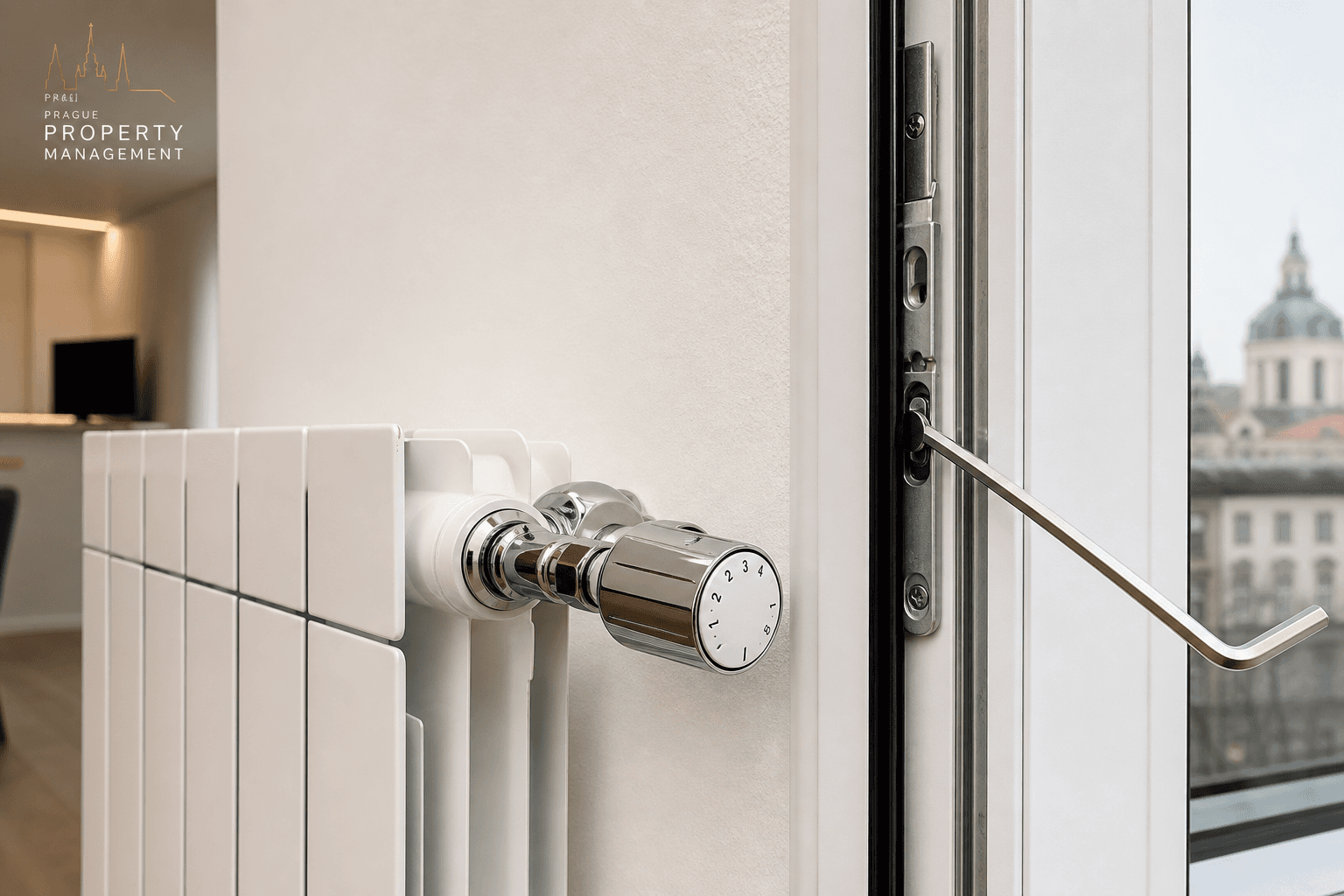
Seized Thermostatic Valves After Summer
When the central heating system is initiated, air pockets naturally migrate to the highest points of the building — meaning radiators inside apartments. Air blocks the flow of the heating medium, causing radiators to heat only partially. However, a more frequent autumn issue is mechanically seized valves. If the thermostatic head was turned to zero all summer, the valve pin was pressed tightly into its seat and often seizes due to limescale and sediment.
Technical solution: When the heating turns on, the radiator remains cold even if the head is turned to maximum. The solution is not buying a new radiator, but removing the thermostatic head and gently releasing the pin mechanically by tapping it or applying silicone lubricant.
03
Adjusting Windows to Winter Pressure Settings (Mold Prevention)
Modern Euro-windows and uPVC windows feature peripheral hardware with adjustable eccentric locking cams. During summer, these are left in a loose position to prevent constant strain on the rubber seals. In winter, however, this summer setting causes drafts, massive heat loss, and moisture condensation at the bottom edge of the glass, creating a direct path for mold growth.
The Fix: By rotating the cams with an Allen key, you increase the sash pressure against the frame by 1–2 mm. This ensures a hermetic seal and reduces infiltration heating losses by 8–12%.
04
Cleaning Forced Ventilation Filters
Apartments in new developments feature local or central Heat Recovery Ventilation (HRV) or forced extraction systems (bathrooms, WCs). After spring and summer, filters are heavily clogged with pollen and street dust. A clogged filter increases aerodynamic resistance, causing the fan motor to consume more electricity, run louder, and drastically decrease air exchange efficiency, which triggers high winter humidity inside.
05
Gas Boiler Inspections: Prevention vs. Czech Legislation
According to Czech law (Decree No. 34/2016 Sb. / Act No. 250/2021 Sb. on dedicated technical equipment), gas appliances must undergo regular annual inspections. Neglecting the annual cleaning of the combustion chamber and burner leads to incomplete combustion, the risk of carbon monoxide (CO) poisoning, and insurance companies slashing payouts by up to 100% in case of an accident.
Leaving the inspection until November is a massive risk — technicians are unavailable and a boiler failure in dead winter leads to immediate emergency accommodation expenses for the tenant.
🛠️ Worry-Free Property Management
Don't want to spend your autumn visiting apartments with a radiator key, measuring window seals, and chasing unavailable service technicians? Under TUTEL's annual technical management plans, we handle all autumn preparations for you. We secure mandatory inspections, adjust windows, and check systems before the freeze sets in.
Book a technical consultation