Bleeding Radiators
How-To Guide4 min read

Bleeding Radiators: How to Get Quiet, Warm Heat Without Flooding the Neighbours

A cold patch at the top of your radiator means trapped air is blocking hot water. This 10-minute job will restore full heat — if you know the one rule that prevents a building-wide emergency.

Book a technical consultation

When a radiator is cold at the top but warm at the bottom, the diagnosis is almost always the same: trapped air. Hot water can't displace the air pocket, so the top portion of the radiator never gets the heat to distribute.

Bleeding it is simple. But in a Prague apartment building — where all radiators share the same pressurised system — there is one step that can cause your neighbour's boiler to shut down if you get it wrong.

01 -- Before You Touch the Valve

Preparation: Valve to Maximum

Proper preparation ensures the system is pressurised and ready for safe bleeding.

Turn the radiator valve fully open: The thermostatic valve on the side of the radiator must be set to its maximum (usually '5' or the sun symbol). If it's partially closed, water pressure behind the vent is too low to expel the air effectively.
Let the system circulate: Turn the heating on and let it run for 15–20 minutes before bleeding. This ensures the whole system is pressurised and the trapped air has collected at the highest point of the radiator — which is where the bleed valve is.
Prepare your materials: You need a radiator vent key (odvzdušňovací klíček — available for 20–50 CZK at any hardware store), a small cloth, and a cup or jar to catch water.

02 -- The Actual Bleed

Using the Vent Key

This is where precision matters. Follow these steps exactly.

Locate the bleed valve: It's a small square or slotted plug, typically on the top corner of the radiator opposite the thermostatic valve.
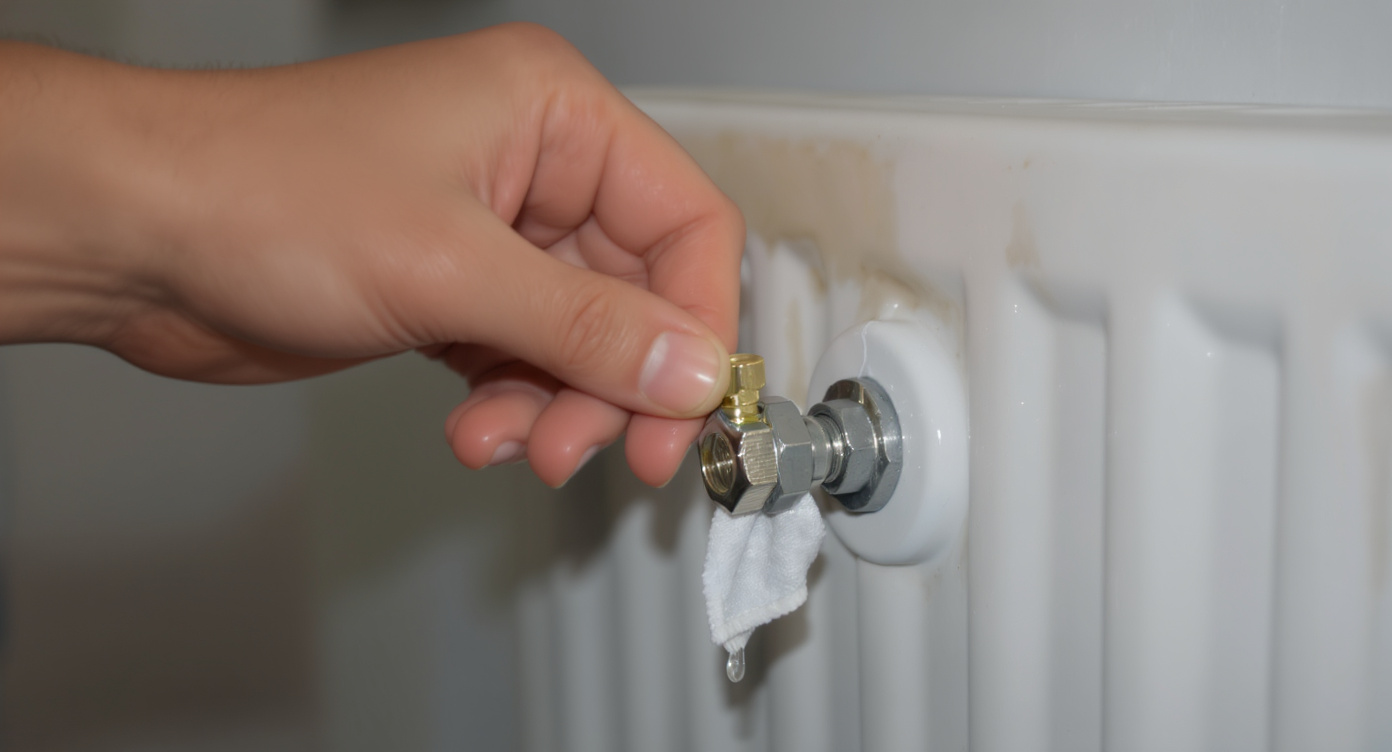
Insert and turn counter-clockwise: Turn the vent key slowly — no more than one full rotation. You will hear a hiss of escaping air. This is correct. Hold the cloth below the valve.
<strong>The 'Siss' Rule — The Guardian Secret</strong>: Stop the moment you see the first drop of water. This is not a suggestion. The moment water appears, the air pocket is fully expelled. Close the valve by turning clockwise — finger-tight, no tools needed. This is the critical rule: if you leave it open, you begin releasing system water, which drops the pressure in the shared building circuit. Drop it enough and the boiler in the basement will hit its low-pressure cutoff and shut down — leaving the entire building without heat.
Check the valve is fully closed: Do not overtighten. The valve only needs to be snug. Overtightening can strip the brass fitting and cause a drip that requires a plumber.

03 -- When Bleeding Won't Help

The Sludge Problem (Kal)

Not all cold radiators need bleeding. Know when to stop and call a professional.

Bottom cold, top warm: If the bottom of the radiator is cold but the top is warm, the problem is not air — it is sludge (kal). Magnetite and limescale deposits accumulate at the bottom of the radiator over years, blocking water flow. Bleeding does nothing for this.
Stuck pin (uvízlý kolík): If the radiator is cold throughout despite the valve being open, the thermostatic valve pin may be stuck. The pin is a small spring-loaded plunger inside the valve body. Remove the thermostatic head and manually push the pin in and out several times. If it moves freely, the valve is functional.
When to call a professional: Persistent cold patches after bleeding, sludge at the bottom, or a stuck pin that won't free — these all require a heating engineer. Attempting to flush or power-flush a radiator without knowing the building's system configuration can damage pumps and pipework.

⚠ RISK: The Building-Wide Pressure Drop

In a shared residential heating system (as found in most Prague apartment buildings), all radiators are connected to one pressurised circuit. If you leave the bleed valve open too long, system pressure drops. Below a critical threshold (typically 1 bar), the boiler shuts down on a low-pressure safety cut-off. Restoring the system requires a boiler engineer with access to the basement plant room — and you will have caused heating failure for every flat in the building. Stop at the first drop of water.

Is Your Radiator Still Cold?

If bleeding doesn't restore full heat, the issue is likely sludge, a stuck valve pin, or an imbalanced circuit. TUTEL can diagnose and arrange specialist heating service.

Book a technical consultation