Prague's apartment market divides cleanly into two construction philosophies: the prefabricated concrete panel building (built 1950s–1990s) and the traditional brick apartment building (built 1890s–1940s). Both have devoted fans. Both hide specific technical problems that don't show up at a viewing and that can cost you six figures to fix. Here is an honest comparison.
Panel Building — The Specific Risks
1a. The Prefabricated Core
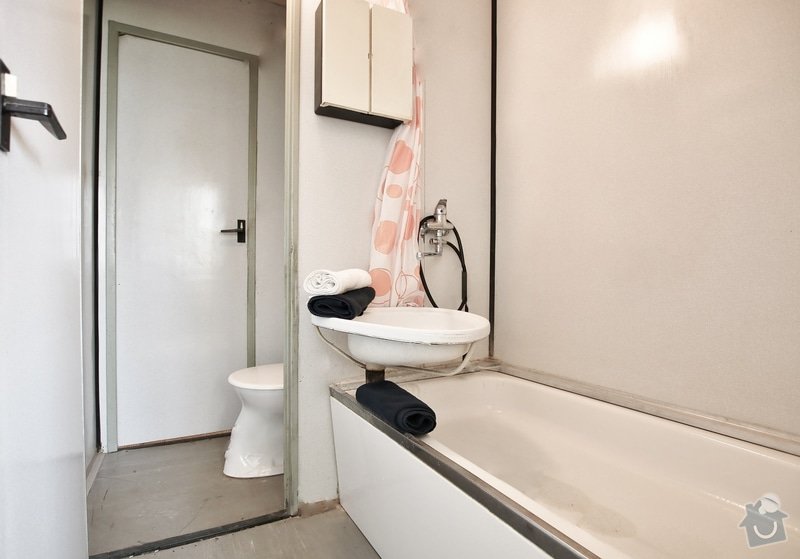
- 1Many panel building bathrooms built before 1985 contain an "Umakart" prefab bathroom pod — a factory-built plastic and asbestos composite core assembled in the factory and craned into the apartment.
- 2Signs: bathroom walls that sound hollow when tapped, tiles that visually don't match the wall angle, or a bathroom that is suspiciously "perfect" yet clearly original.
- 3The problem: these cores often have asbestos in the bonding adhesives and backing panels. Renovating requires certified asbestos removal — starting at 50,000 CZK and easily reaching 150,000 CZK.
- 4Always ask: was the original bathroom core replaced? Get documentation.
1b. Asbestos in Other Locations
- 1Window panel gaskets and floor-levelling compounds in panel buildings built before 1989 frequently contain asbestos.
- 2A certified asbestos survey (azbest audit) costs approximately 5,000–10,000 CZK and should be included in any pre-purchase due diligence on a pre-1989 panel building.
1c. Panel Joint Seals
- 1The building's structural integrity depends on the sealing compound between prefabricated concrete panels. These seals have a design life of 20–30 years.
- 2A well-managed panel building will have records of joint seal replacement. An unmanaged one may have seals that are 40+ years old — meaning water infiltration risk and cold bridges at every wall joint.
- 3Ask the HOA (SVJ): when were the panel joints last inspected or replaced?
Brick Building — The Specific Risks
2a. Wooden Ceiling Joists
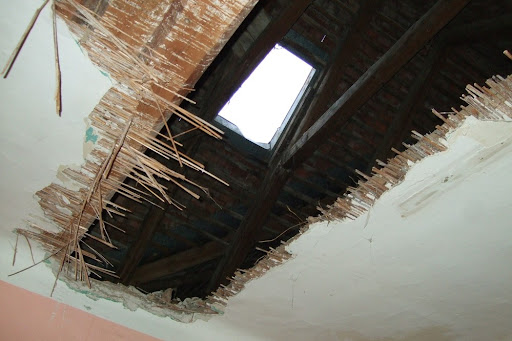
- 1Many pre-war brick buildings use wooden ceiling joists. These are structurally sound when dry and well-maintained, but highly vulnerable to moisture.
- 2If the building ever had a roof leak or pipe burst on an upper floor, wooden joists may have partially decayed or been attacked by timber beetles. This is invisible from below.
- 3A thermal camera + tap test during inspection reveals hidden voiding in the structure. When in doubt, request the building's repair history from the SVJ.
- 4Replacement of a wooden floor structure in a single apartment costs 50,000–150,000 CZK and requires structural engineering sign-off.
2b. Irregular Wall Thicknesses
- 1Brick walls in apartment buildings were built by hand and vary in thickness — often 30 cm on exterior walls, 15 cm on interior walls, but this is not consistent.
- 2For renovations requiring kitchen island plumbing, bathroom wall niches, or anything that relies on wall dimension assumptions, you need to measure every wall before drawing plans.
- 3The phrase "we'll work around it" from a contractor on irregular walls almost always means cost overruns.
Planning to convert a studio into a 2-bed? See how waste-pipe gradients and circuit-breaker limits affect the layout: Studio Renovation — Circuit Breakers & Waste-Pipe Technical Limits.
2c. Load-Bearing Wall Uncertainty
- 1Unlike panel building construction where load-bearing walls follow a documented structural system, brick buildings often have ambiguous load-bearing patterns. Before removing any wall, a structural engineer must verify — this is Czech law, not just good practice.
- 2Budget: structural engineering assessment 5,000–15,000 CZK. Non-compliance fine: up to 100,000 CZK plus mandatory reinstatement.
Neither building type is inherently safer. The question is always: how well has it been managed, and what has been documented?
| Factor | Panel Building | Brick (Cihla) |
|---|---|---|
| Asbestos risk | Pre-1989: medium–high | Rare (some older buildings) |
| Moisture risk | Panel joints if unmanaged | High if historical leak in wooden joists |
| Renovation complexity | Standardised layout, limited wall changes | Irregular walls, load-bearing uncertainty |
| Documentation availability | Generally good (SVJ records) | Variable — often incomplete |
| Energy efficiency | Good if insulated post-2000 | Poor unless windows + insulation upgraded |
| Typical hidden cost discovery | Asbestos removal, joint resealing | Joist replacement, structural engineer |
"A panel building with good SVJ records and recent joint seals will outperform a 'beautiful' brick building with 40-year-old wooden joists and no maintenance history every time."
Related Articles

Know What You Are Buying Before You Sign.
TUTEL's pre-purchase inspection audits both building types — checking documentation, performing physical tests, and giving you a clear technical picture before any commitment.
Book a technical consultation