Reconstructing a Prague 1+1: The Technical Limits Nobody Mentions
Moving the kitchen to create a 2+kk feels obvious. Physics, waste-pipe gradients, and your building's electrical panel often disagree.
The Dream vs. The Reality
The most common 1+1 upgrade plan: move the kitchen from the hallway nook to the main living room, open up the layout, and suddenly you have a marketable 2+kk that commands 20–30% higher rent.
In practice, two physics problems stop this renovation before it starts in most Prague apartments: waste pipe gradient and electrical capacity.
This article explains both constraints clearly so you can assess feasibility before commissioning expensive architectural drawings.
The Waste Pipe Slope Problem
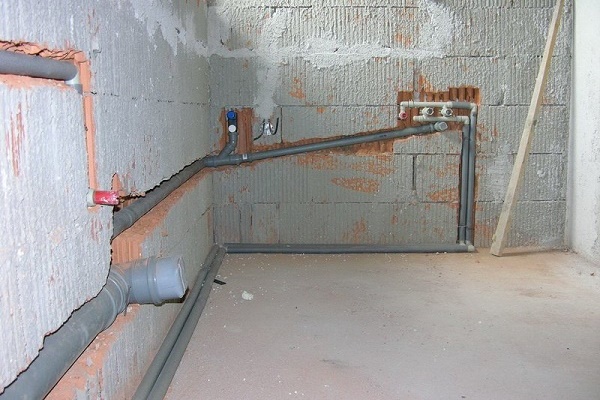
A dishwasher connects via its own flexible discharge hose — but that hose still connects to fixed pipework. The fixed drain (serving both the sink and the dishwasher outlet) requires a minimum gradient of 2–3% toward the building's main soil stack (svislé odpadní potrubí).
If your new kitchen position is 5 meters from the soil stack, you need 10–15 cm of height drop. In a ground-floor apartment this often means cutting into the concrete slab — a structural intervention requiring building management approval.
The alternative is a macerator pump. These devices shred waste and pump it upward. Worth considering before committing: (1) they are audible in a quiet apartment, (2) they require a permanent power connection, (3) any mechanical failure risks an overflow. Discuss these factors in detail with your contractor.
Practical test at viewing: Ask where the main soil stack is. If it is in the hallway, moving the kitchen to the far wall of the living room is almost certainly a structural floor job.
Key term: Czech building regulations (ČSN 75 6760) govern minimum gradients. Always reference this to contractors.
The Amperage Trap — Breaker and Phase
Most pre-1990 Prague 1+1 apartments are connected with a single-phase supply and a 15A or 20A circuit breaker.
A modern induction hob draws 7.2 kW (32A). An oven draws 2–3 kW. An air conditioner draws 1.5–2 kW. Combined: you have blown past the 15A limit before you boil water.
The solution is a 3-phase connection upgrade. In Prague, this means applying to PRE (Pražská energetika). The process takes 3–9 months and costs 30,000–80,000 CZK including the new panel. Building management must approve the cable routing.
The shortcut that doesn't work
Simply upgrading to a higher single-phase breaker (e.g. 25A). The building's common electrical infrastructure may not support it, and an electrician who does this without PRE approval is working outside regulations.
Smart budget rule: If your renovation plan includes induction hob + oven + AC, build in a 3-phase upgrade from day one. Don't discover this constraint mid-project.
How to Assess Before You Commit
Use this structured checklist to evaluate feasibility before you spend money on architectural drawings:
Locate the soil stack
Locate the soil stack on the floor plan before any design work. If unknown, ask the building manager for technical drawings.
Measure the distance
Measure the exact distance from proposed kitchen position to stack. More than 3m = investigate floor structure.
Check the electrical panel
Check the electrical panel — note the breaker amperage and phase count. Photograph it.
Ask about 3-phase availability
Ask building management: "Is 3-phase power available in the building?" This determines if upgrade is even possible.
Get specific quotes
Get two quotes specifically mentioning waste routing and electrical upgrade — not just general renovation quotes. The difference reveals what each contractor has actually considered.

“A renovation that looks like a layout decision is often an infrastructure project. Know what you're buying before the drawings start.”
Related Articles
Not Sure If Your Renovation Is Technically Feasible?
TUTEL can assess your apartment's technical constraints before you invest in architectural drawings — saving you time, money, and unpleasant surprises.